 Castelo de Ortahisar Cappadocia
Castelo de Ortahisar
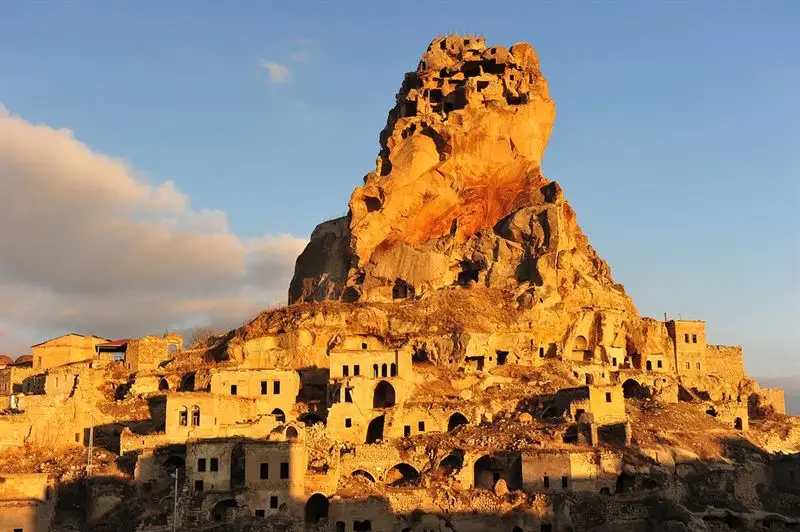
Ortahisar, uma aldeia capadócia muito antiga, é o lar do Castelo de Ortahisar. A área é bem conhecida por seu castelo, que abriga a maior lareira de fadas na área. Os assentamentos existiram por muito tempo. Ortahisar foi fundada no século XI. Os turcos uzbeques de Khorasan construíram nove moradias distintas aqui quando as pessoas começaram a migrar da Ásia Central para a Anatólia. Nove famílias construíram as primeiras casas em Ortahisar, que mais tarde se desenvolveram em uma cidade. Essas nove famílias também foram os primeiros colonos.História do Ortahisar
A região de Ortahisar tem historicamente visto muitas civilizações diferentes. A.C. Etiler foi responsável nos anos 1500, os frígios nos anos 1200 e os lícios e persas em 657. Eventualmente, os romanos e os bizantinos foram responsáveis por eles. Em 1916, tornou-se uma cidade. Foi uma das primeiras áreas da região de Cappadocia a ser acessível aos turistas. Durante a Batalha de Manzikert em 1071, os turcos tomaram o controle da área. Devido às numerosas civilizações que habitaram esta área, é muito cultural e historicamente rica. Também em Etiler é o Castelo de Ortahisar. Nesse ponto, o primeiro esculpir começou. Depois disso, os romanos, bizantinos, seljuks e otomanos começaram a usá-lo como um abrigo.Avaliações do Castelo de Ortahisar
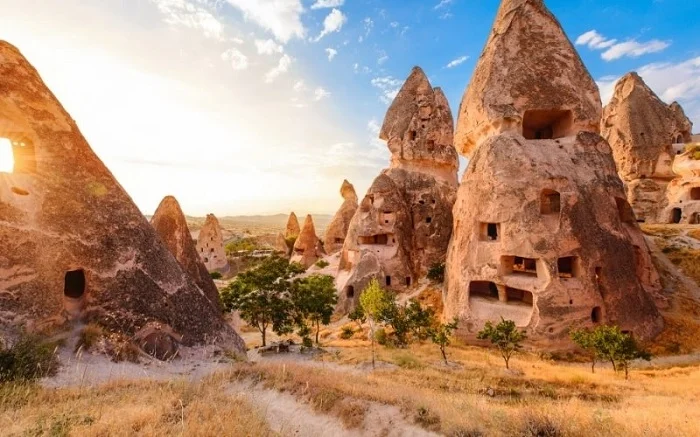
The greatest fairy chimney in the Cappadocia region is known as Ortahisar Castle, which bears the name of the town in which it is situated. This castle is one of the first buildings ever found to have more than one floor. It looks like the Tower of Babel. Caravans on the Silk Road have made it one of their frequent stops. There are deep valleys all around the castle's three sides. During the conflict, the castle's rocks were used as a haven and a line of defense. Etiler carved it at first so that it might serve this purpose.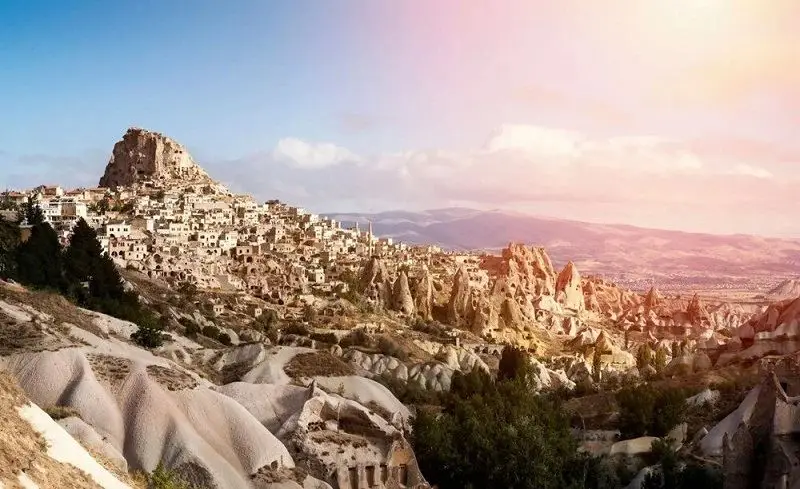 Vista do Castelo Ortahisar
A era Otomana, Castelo de Ortahisar
Fatih Sultan Mehmet added Nevşehir's Ortahisar Castle to Ottoman land in the year 1470. On the east side of the castle, which is visible from its view, is another castle. The tiny Ortahisar Castle is another name for Ishak Pasha Castle. Ishak Pasha is dispatched to the area by Fatih Sultan Mehmet to address the Karaman problem. Shak Pasha will want to take Temenni Hill as soon as he enters the area. Then it will be Ortahisar Castle's turn. When he wants to conquer, the populace will defend themselves against Pasha and barricade the castle's entry and exit with enormous millstones. Ishak Pasha begins building tunnels for his forces after realizing he cannot capture the castle in this manner.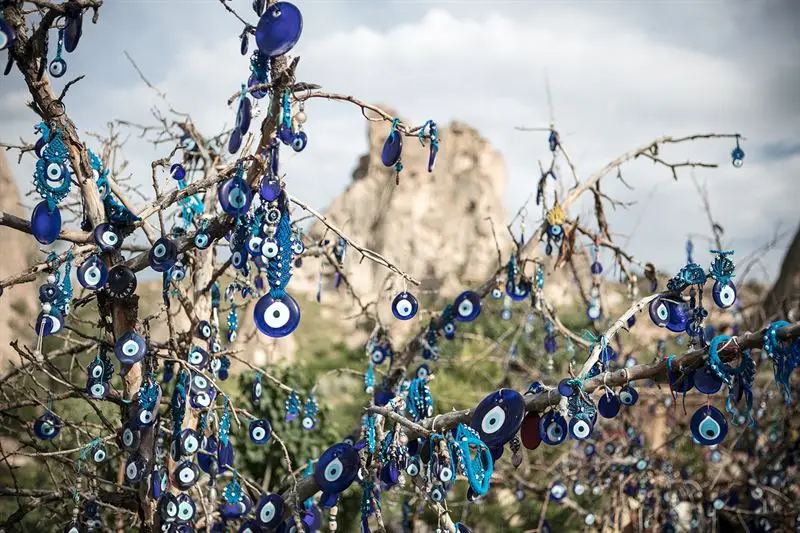 Os olhos do mal
Onde está o Castelo de Ortahisar?
Anciently carved, the historic skyscraper Ortahisar Castle gives you a bird's-eye view of the Avanos, Goreme, and Ürgüp regions. The breathtaking vista it offers impresses its guests. Many people who want to visit the castle ask where Ortahisar Castle is with this renowned view. The Ortahisar region includes Ortahisar Castle. The town where it is located gave it its name. The Cappadocian town of Urgup is home to Ortahisar Castle. The core and Nevşehir center are separated by 15.5 kilometers. 6.3 kilometers separate Ürgüp from Ortahisar. The region of Göreme is also extremely close to Ortahisar Castle. There is a 4-kilometer distance between the two locations. You shouldn't leave the area without visiting them because they are so close to one another.Atrações perto de Castelo de Ortahisar
The Ortahisar region, which possesses Cappadocia-like regional features, has a lot of interesting things to see. Travelers should stop at these locations before continuing to the other side. In this area, there are a lot of scenic natural areas and historic locations. The Ortahisar region, which has long been home to civilizations, still shows signs of a thriving monastic past. With Ortahisar churches, this scenario may be seen much more vividly. There are many different churches, such as the Hallac Dere Monastery, Harim Church, Tavşanl Church, Cambazl Church, Sarca Church, and Balkan Creek Churches. While in the area, travelers should surely stop by these unique churches.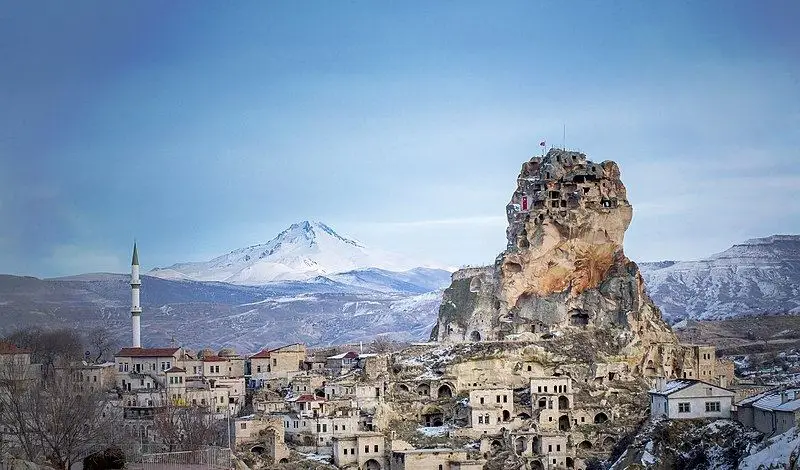 Castelo de Ortahisar Cappadocia
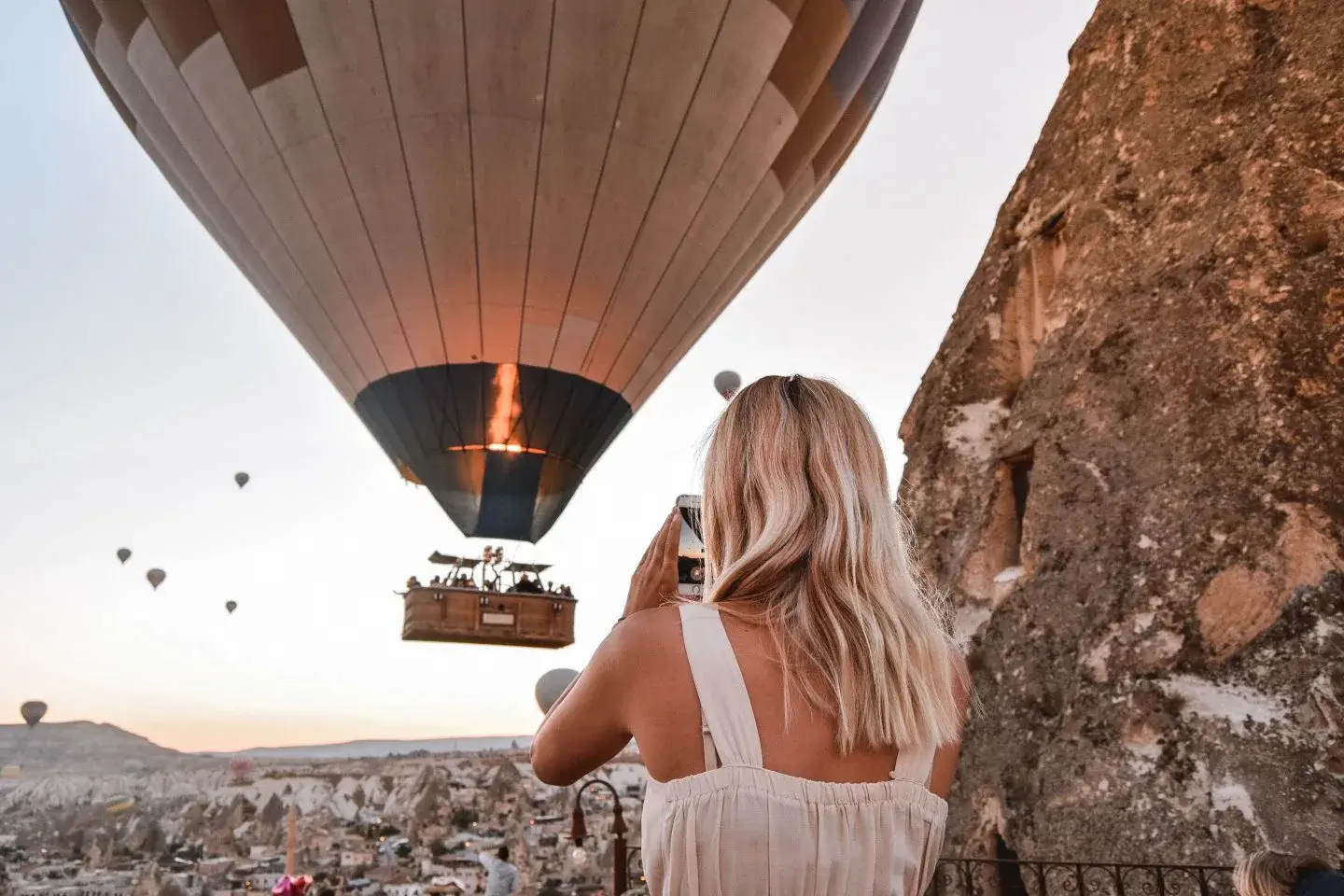
O Vale Pancarlik, que está localizado no lado direito da estrada Ürgüp Mustafapaşa, acolhe pessoas interessadas em aprender mais sobre os vales com beleza natural na área. No vale estão as igrejas de Kepez e Sarca. Neste momento, as pessoas podem se inscrever para os passeios de bicicleta planejados. Balões são outra maneira de ver os vales.
Os visitantes também podem visitar o Museu Etnográfico na área de Ortahisar. Outro local de visita obrigatória é o museu na Cumhuriyet Plaza. No museu, os visitantes podem observar as características distintivas de inúmeros artesanatos locais, como o processamento de rochas duras e tecelagem de tapetes.
Updated on