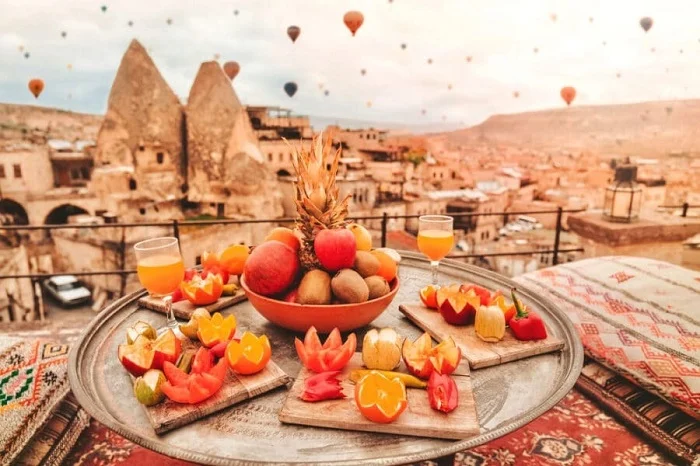
ماذا تفعل في كابادوكيا؟
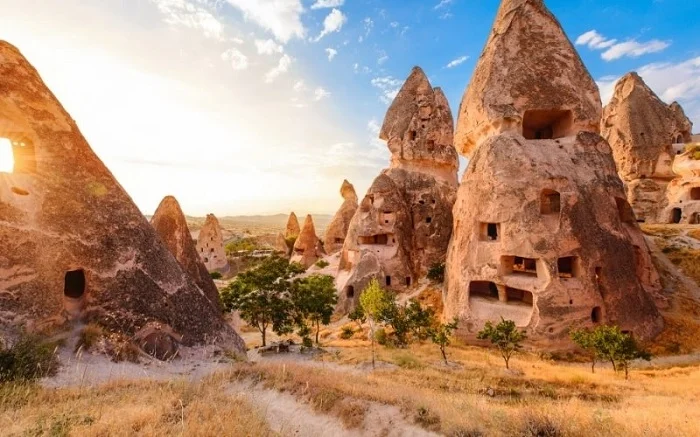
Cappadocia, an area of whirling volcanic-rock landscapes so odd that they seem to have been fashioned by naughty fairies, is high on every tourist's Turkey bucket list. However, it is the result of wind and water gradually eroding the rock. Since at least the Bronze Age, people have lived in this area. They left their mark on this strange lunar landscape by digging tunnels into the soft volcanic rock. The main tourist attractions are the towns in Cappadocia that are cut into the sides of hills, the rock-cut churches from the Byzantine era that have beautiful murals, and the underground city where early Christians used to hide from their enemies. Cappadocia's valleys are one of the best places to go hiking and horseback riding in Turkey. Because of the way the valleys look from above, they are also one of the best places in the world to take a hot-air balloon ride. If you need inspiration for your vacation, check out our list of the best Cappadocia attractions. Also, see:
الطيران فوق الدماغ في حوض الهواء الساخن.
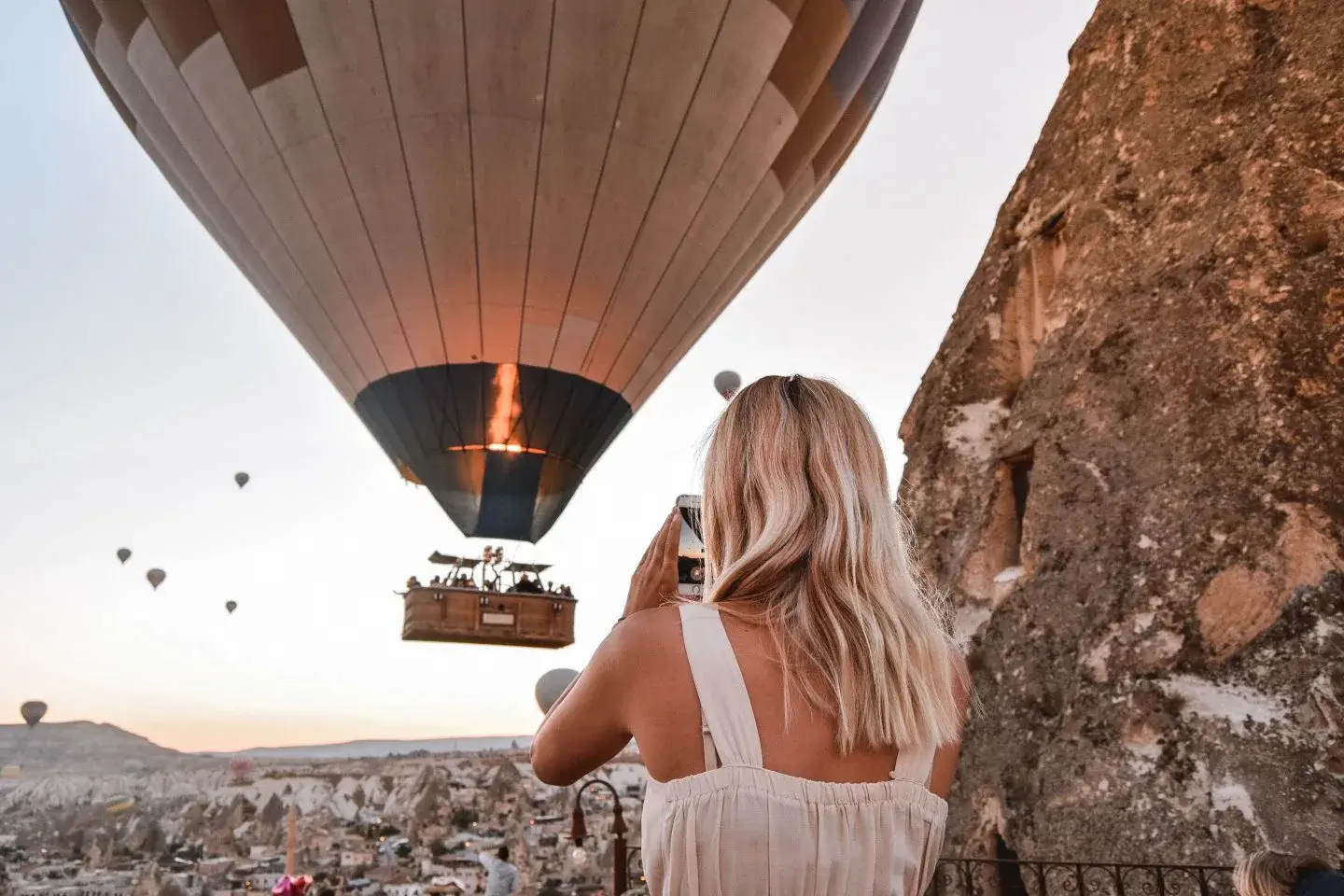
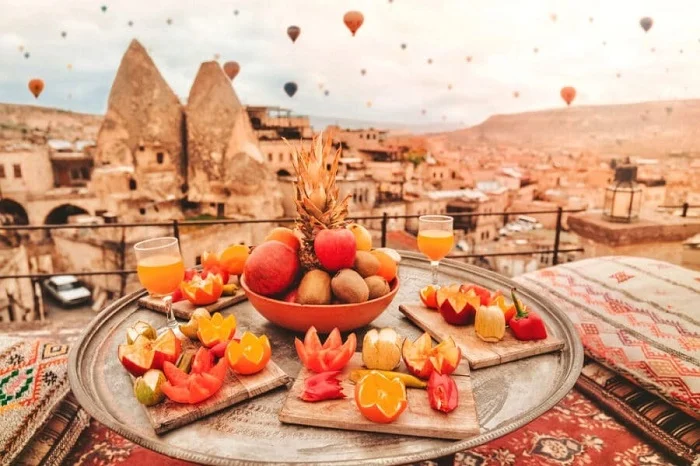
Going on an early morning hot-air balloon trip in Cappadocia is one of the highlights of Turkey for many travelers. During the busy summer season, more than 100 hot-air balloons take off as soon as the sun comes up, giving passengers a bird's-eye view of the central valley and its rock formations. Balloons fly every day of the year unless they are canceled due to bad weather. The standard flight path passes over the Red, Rose, and Meskendir Valleys, while wind conditions may cause you to fly over other nearby places. Hot-air balloon trips last around one hour (with deluxe packages lasting around 90 minutes). All excursions include hotel pickup and drop-off and, in most cases, a breakfast buffet. It is important to note that if you are visiting Cappadocia from Istanbul only to do hot-air ballooning, you must spend at least one night here due to the early morning start of the balloon trips. You may also be interested in كابادوكيا الطائرة الحاراذهب إلى متحف العرض المفتوحمن الكنائس في Göreme
The UNESCO World Heritage site of Göreme Open-Air Museum is a monastic cluster of rock-cut chapels and monk cells with amazing murals, located just outside the hamlet of Göreme. The paintings were made during the 10th and 12th centuries when Cappadocia was a very important Byzantine religious center. The complex contains several churches and chapels, the most important of which are the Elmal (Apple) Church, with its Ascension fresco above the door; the Azize Barbara (St. Barbara) Chapel, with its red-ochre interior decoration; the Ylanl (Snake) Church, with its wall-paintings of St. George and an interesting fresco of the hermetic hermaphrodite St. Onuphrius; and the cavernous Tokal (House). The most important part of the complex, though, is the Karanlk (Dark) Church, which has murals that are thought to be some of the best examples of mid-Byzantine art still around. You may also be interested in كابادوكيا كابادوكيا الطائرة الحاررحلة طويلة أو عطلة على الرمال عبر الأنهار الأحمر والرومان
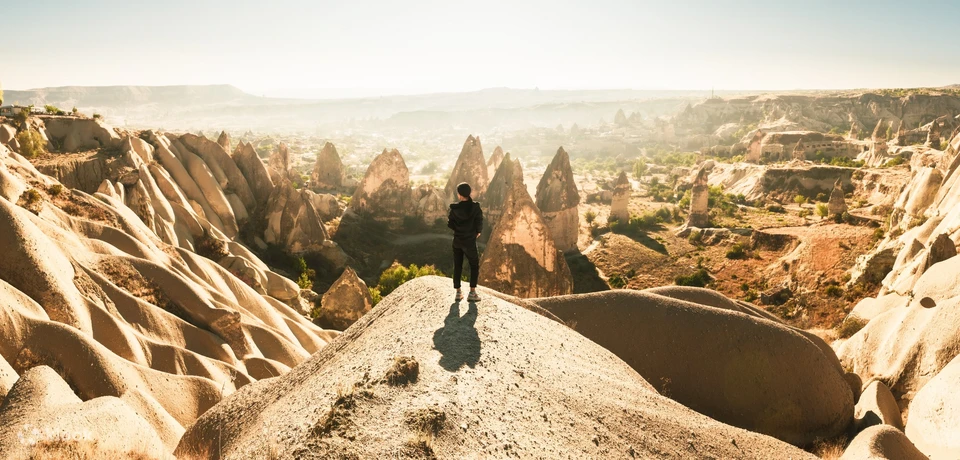
The most stunning interconnected valleys of Cappadocia may be found between the settlements of Göreme and Avusin. The pink, yellow, and orange cliffs of this area are the result of a volcanic eruption and thousands of years of wind and water erosion. The rock walls in this area are wavy and rippled. Between the cliffs are lush orchards and vegetable gardens that are still cared for by local farmers. In the rock are hidden chapels and hermit caves from the Byzantine era. Hot-air ballooning over the valleys gets all of the attention, but there are lots of other activities in Cappadocia that can help you enjoy the greatest views of the valleys. There are plenty of hiking routes nearby, so now is the time to put on your walking shoes and hit the trails. Hikes vary in length from a few hours to all-day excursions. The Kolonlu (Column) Church, where columns were cut out of the rock; the Hacl (Cross) Church, with its huge cross, cut into the cave ceiling; and the Üc Hacl (Three Cross) Church, with its well-preserved ceiling carvings and interesting (but badly damaged) frescoes. Horseback riding in the valley is also popular. Most routes are better for intermediate cyclists than for beginners because the land is rough. You may also be interested in كابادوكيا الطائرة الحارقة الخاصةاذهب إلى القرية المجاورة
For good reason, various travel publications have named Göreme one of the most beautiful villages in the world. The settlement lies half-buried in the hill, its stone building facades concealing a labyrinth of cave chambers underneath. Goreme is the tourist hub of Cappadocia, and many of the historic buildings here have been converted into boutique cave hotels. El Nazar (Evil Eye) Church and the Sakl (Hidden) Church are both accessible through Müze Caddesi, a short walk from the center on the route to Göreme Open-Air Museum. The settlement is the major starting point for hikers, with all of the main valleys branching out from here, giving a myriad of paths that go through bizarre rock formations known locally as "fairy chimneys" and "secret cave churches" up to panoramic vistas. You may also be interested in رحلة يومية من إسطنبول إلى كابادوكيااكتشاف تحت الأرض في كايماكلي ودرينكيو
Cappadocia's subterranean towns were originally excavated in the Bronze Age Hittite era, but they are most known for their early Byzantine history (6th and 7th centuries) when the region's Christians turned to live underground for lengthy periods to avoid Arab and Persian invasions. Cappadocia's greatest example is Kaymakli Underground City, with an eight-level maze of chambers linked by tubes. Visitors may tour four of these levels. Derinkuyu Subterranean City is the deepest underground shelter in Cappadocia. As they journey farther and deeper down the earth, the tunnels get more claustrophobic. In this underground labyrinth, there is a massive church as well as other residential and storage spaces to explore. The clever ventilation shaft system employed by the Derinkuyu residents is also visible. Derinkuyu and Kaymakl Underground Cities are near enough together that you can visit both in a day, but if you only want to see one, Kaymakl is less popular with huge tourist bus loads, so you're more likely to be able to explore the tunnels here without being hampered by crowds. Going down into the maze of tunnels is exciting, but people with claustrophobia should know that some parts of the tunnels are very tight. You may also be interested in the رحلة خاصة لمدة 3 أيام في كابادوكيازيارة متحف Zelve Open-Air
When you walk through the Zelve Open-Air Museum, you can see how ancient Cappadocia looked. The cliffs are made of granite and have homes built into them. In the 9th century, the town began as a monastery. By the 20th century, it had grown into a prosperous hamlet. The community had to be abandoned in 1952 due to erosion and rockfall hazards. The whole valley is now a museum. There are a few noteworthy chapels to view, the most preserved of which is the Üzümlü (Grape) Church, as well as a fairly attractive rock-cut mosque. The main thrill of this site, though, is walking down the cliffside walkways, discovering the fire-blackened interiors of the cave houses, and gazing out at the breathtaking views of the surrounding landscape. You may also be interested in رحلة كابادوكيا من إسطنبولاذهب إلى مسيرتي عبر قرية Ihlara
The small, lush valley at the foot of this 100-meter-deep canyon in southwest Cappadocia is a nature lover's paradise. The Ihlara Valley, which is surrounded by rough, high cliffs, is a beautiful Eden with tall poplar trees and rich farmland. The Melendiz River, which flows 14 kilometers from Selime village to Ihlara village, gurgles through the valley. During the Byzantine Empire, this was a popular place for hermetic monk groups to get away. They built churches and monasteries into the rock face. The three best are the Kokar (Fragrant) Church, Ylanl (Snake) Church, and Krk Dam Alt Church (also known as St. George Church), although there are many more to see along the road. The Selime Monastery rock peak, with its cave chambers and chapels, is a beautiful place to start or end a climb in the Ihlara Valley near Selime hamlet. You may also be interested in the رحلة خاصة لمدة 2 أيام في كابادوكيازيارة الكنائس في Cavusin
Two magnificent Byzantine churches are the primary attractions of the little town of Cavusin. The Cavusin Church, also called the Big Pigeon House Church because it was used as a pigeon house in the early 1900s, is near the entrance to town and has a beautiful frescoed interior. You may also be interested in الرسائل والمواد الخاصة في كابادوكيا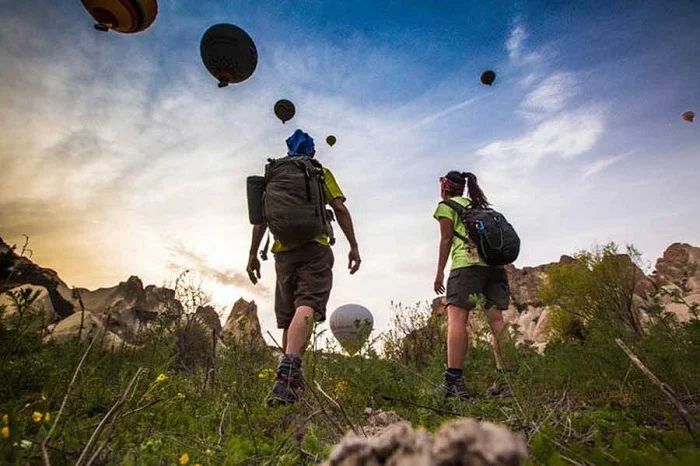
أين زيارة في كابادوكيا؟
زيارة متحف Soganli Open-Air Soganli's twin valleys are dotted with pyramid-shaped rock pinnacles that were initially cut down during the Roman Empire. By the time the Byzantine era was at its peak, Soganli had become an important monastic settlement. Its granite pinnacles, which held chapels and monk cells, were a sign of this. The Karabaş (Black Hat) Church, Ylanl (Snake) Church, and Sakl (Hidden) Church have the best-preserved frescoes in this chapel cluster. Soganli is a good day trip destination, with the route going there passing through peaceful towns and ancient landmarks. The Byzantine-era Keşlik Monastery and the ancient remains of Roman Sobesos are two of the greatest places to stop. You may also be interested in أهمية خاصة لرحلة الكابادوكيا زيارة شمعة Pasaba Fairy Chimneys Paşaba valley's hoodoos (also known as fairy chimneys in Cappadocia) have made it one of the region's most recognized features. In the early Byzantine era, a group of monks who followed Saint Simeon Stylites, a monk who lived on top of a pillar in northern Syria for most of his life, devoted their lives to their own stylite practices. They carved monk cells high up in the rock pinnacles instead of pillars to living a hermitic life of devotion. One of these monk cells is still accessible. A visit to Pasabag Valley may be coupled with a visit to Zelve Open-Air Museum since the two locations are just approximately two kilometers away on the same road. You may also be interested in دورة الطعام الكابادوكيا ومسرح الحياة المحلي 11 - التتويج بالصخرة في سيتيزار Uçhisar is dominated by a massive rock-cut fortification studded with tunnels and caverns. During the Roman and Byzantine eras, this granite outcropping and the underground towns in the area kept people safe from attackers. You can climb to the top of the stronghold, where you'll get a great view of the rolling hills of the village. Uçhisar is also a popular tourist destination, with several boutique cave hotel options. The community is an excellent starting point for valley hikes. Trails via Pigeon Valley and White Valley, in particular, go from here to Göreme, allowing an easy picturesque trip between the two settlements. You may also be interested in رحلة خاصة إلى كابادوكيا زيارة Avanos لشراء الحبوب المحليةAvanos is a thriving provincial town on the banks of the Kizilirmak River. The older portion of town twists up the hillside in a tangle of cobblestone streets surrounded by crumbling Ottoman houses, making for an intriguing promenade, but the primary attraction in Avanos is its ceramics. This town's pottery industry dates back to the Hittite era, and local craftsmen still use the characteristic red clay of the Kizilirmak River in their work today. Many of the pottery studios and stores can be found along the main road in the town center, next to the river, and many of their owners are eager to let you watch them work or try your hand at making a basic pot yourself. You may also be interested in رحلة خاصة في كابادوكيا زيارة معبد Eski Gümüşler ليلة واحدة This rock-hewn monastery complex, located about 10 kilometers northeast of the town of Nide in Cappadocia's south, is home to some of the region's most stunning Byzantine paintings. Some paintings from the 11th century show the Annunciation and the Virgin Mary with the Archangels Gabriel and Michael. The maze of tunnels inside the complex that has lately been repaired and opened to tourists is almost as amazing as the paintings. They're a little tight in places, but they're a lot of fun to scramble through. You may also be interested in شخصية Cappadocia Self Schedule Tour في أوقات الفراغ 14 - اذهب إلى كاشيري. Most travelers just see Kayseri on their route to and from the airport, but for those with some more time, this busy city contains a few notable Seljuk and Ottoman landmarks. The ruins of Kayseri Castle are in the middle of town, between modern stores and busy roads. Nearby, in Mimar Sinan Park, is the well-preserved site Medrese, which was one of the world's oldest medical schools and is now home to the Museum of Seljuk Civilization. The museum has a carefully chosen collection of textiles, jewelry, pottery, and stone work. The Archaeological Museum in Kayseri is well worth a visit for its displays from the Kültepe Hittite excavation sites. From wherever in the city, Mount Erciyes stares down upon you. The village is within a short drive of Cappadocia's tallest peak and its winter ski slopes. The Seljuk caravanserai at Sultanhan lies just to the southeast of Kayseri and is an excellent halt if you're traveling on to Sivas. You may also be interested in رحلة خاصة من جزر الكابادوكيا زيارة المشاهدات على الطريق إلى هازبيكتو. Hacbektaş is a pilgrimage site for the Bektaşi order of dervishes, which was joined by the Iranian philosopher and Sufi Haci Bektaş Veli. The town's dervish lodge is now a museum and a place of great religious service. It has the grave of Haci Bektaş Veli and many interesting displays about the faith. The town of Gülşehir, located on the route between Nevşehir and Hacbektaş, is home to two unique sites worth stopping at along the journey. Most likely, monks lived in the rock-cut monastery of Ack Saray, which has a number of interesting cave-cut chambers, in the 6th and 7th centuries. A little farther down the road is the Saint-Jean Church, which was built in the 13th century but is rarely visited even though the inside is colorful and well-kept. You may also be interested in Private Red Tour Cappadocia 16. Stroll around Ürgüp's Old Town Streets Ürgüp does not have many genuine sites, yet it is a popular tourist destination due to its boutique hotels and strong restaurant scene. Relics from the Seljuk era include a mosque from the 13th century and a few graves from that time. The town's old neighborhood, which spreads out from the modern town center, has some unique examples of Ottoman-Greek stone house architecture. These houses are all that is left of Cappadocia's once-thriving Ottoman-Greek community, which had to leave because of the Treaty of Lausanne's 1923 Population Exchange conditions. Mustafapaşa, a neighboring settlement, has considerable Ottoman-Greek architecture. In the center of the hamlet is the Agios Konstantinos-Elini Church. Just outside of town in the appropriately named Monastery Valley are a number of smaller cave churches. You may also be interested in رحلة خاصة Cappadocia Silver
Updated on