 Gomeda Valley
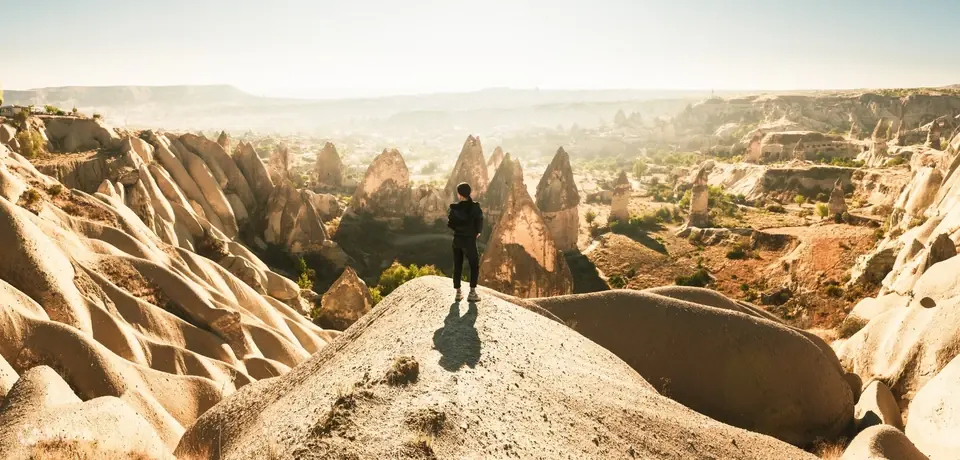
One of Cappadocia's "wonderland" locations is Gomeda Valley. Visitors are greeted by a breathtaking view of nature in the area known as Kücük Ihlara, where they can enjoy a tranquil journey in the company of vibrant butterflies. In actuality, Gomeda, the most enigmatic location in Cappadocia, or Bey Stream as it flows through Gomeda Valley, has always piqued the region's interest.Where is Gomeda Valley?
Mustafapasa Village is home to Gomeda Valley. Despite being an ancient Greek settlement, the village is the most popular destination in Cappadocia. Along with the Gomeda Ruins that stand out while entering the valley, there are several caverns and tunnels along the journey in the valley. You can embark on an interesting journey while taking breathtaking pictures of the area.Routes to the Gomeda Valley
Locations to visit in Gomeda Valley; routes to Gomeda Valley; You have to first travel to Mustafapasa Village to get to Gomeda Valley. The village is only 5 kilometers from Ürgüp and 25 kilometers from Nevsehir. The shuttles leaving from Nevsehir bus station can take you there. Nevsehir, Ortahisar, Ürgüp, and Mustafapasa highways should be taken by those who desire to provide transportation by personal vehicle, accordingly.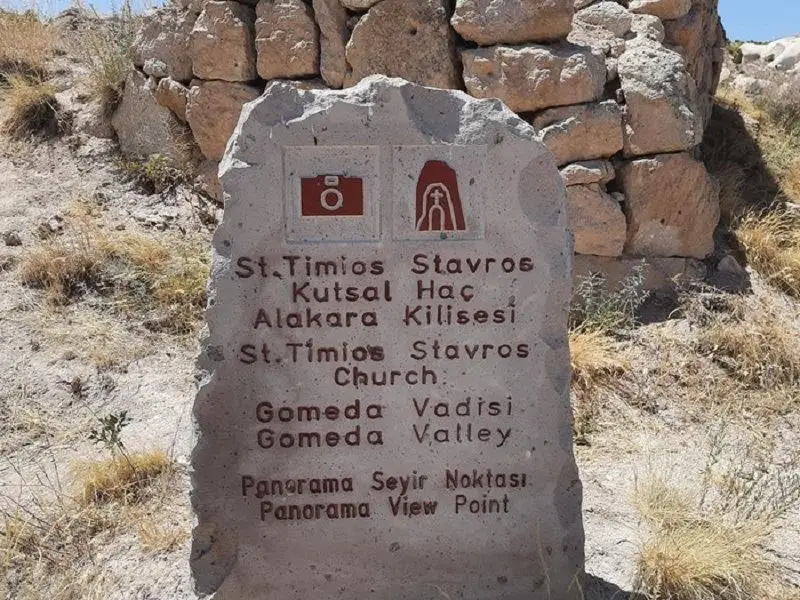 Gomeda Valley Cappadocia Hiking
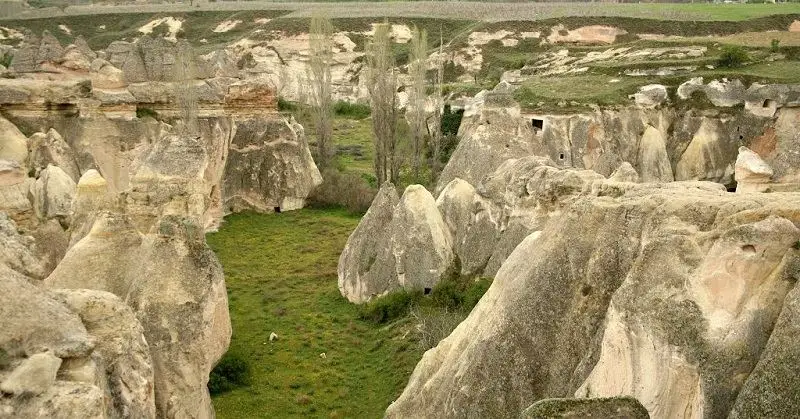
This information will suffice for individuals seeking an answer to the question of where the Gomeda Valley is. The Gomeda Valley Tale is a topic that many people are studying. There are numerous caverns in Gomeda Valley, which is where nature-loving tourists should start when visiting Cappadocia. It is possible to wander among dozens of poplar trees while the rainwater that has accumulated in the caves from ancient times to the present creates a unique panorama.
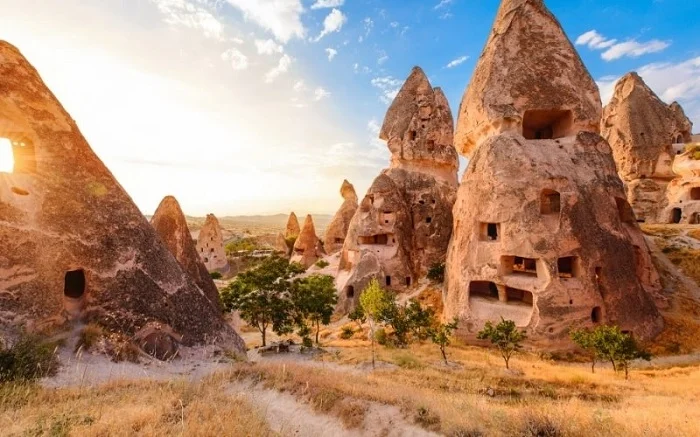
In addition to these pitch-black caves, it can be noted that the area is home to a large number of tunnels that draw tourists. The dovecote trees, which grab attention when wandering in the valley, are also regarded as important for picture framing. The locals of the area still have access to fertilizer because of the dovecotes, some of which are carved into the rocks, some of which are single, and some of which are multi-story.The Tale of Gomeda Valley
One of the topics that many visitors look up before visiting the area is the history of the Gomeda Valley. While the region is recognized as the haunt of fairies, it has also been identified as the first address of the fights between good and evil. Apparently, after the baddies won the battle, he went down into the valley's darkest caverns, dozed off for a very long time, and then started waiting for the good to perish. A 2007 film titled "Gomeda" was also filmed in the Gomeda valley.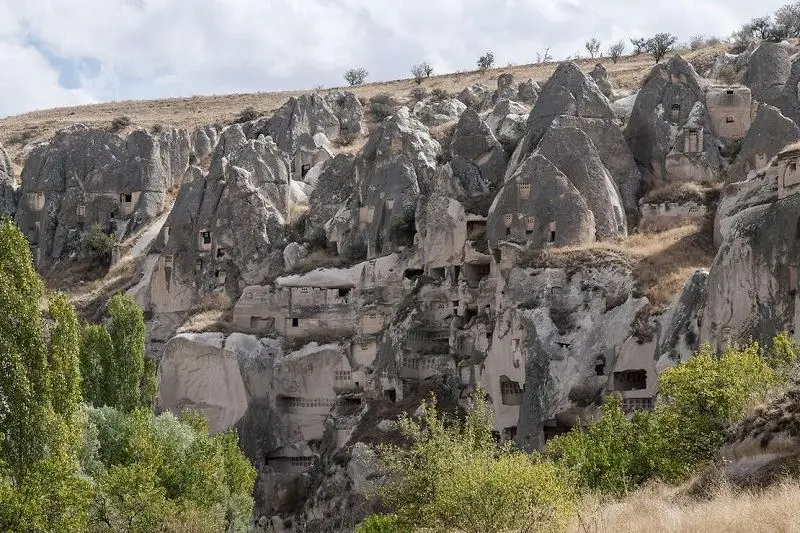 Gomeda Valley Cappadocia
Gomeda Valley Attractions
St. Basil's Church, the Rock Belt, Underground City, and Alakara Church are all mentioned.St. Basil’s Church
After a short climb, you can reach the church, which is in a very important place. On the rocks sits the Church of St. Basilios, which serves as a hidden refuge and welcomes visitors. On the western side of the valley is the church of St. Basilios, which has a rectangular design. This building is one of the few Byzantine churches that have survived. It also has a large cross with geometric designs on it. According to the facts written on the church's cornice, one of the region's kings dreamed about Christianity in the past, and it was said that Christianity would become the official religion.
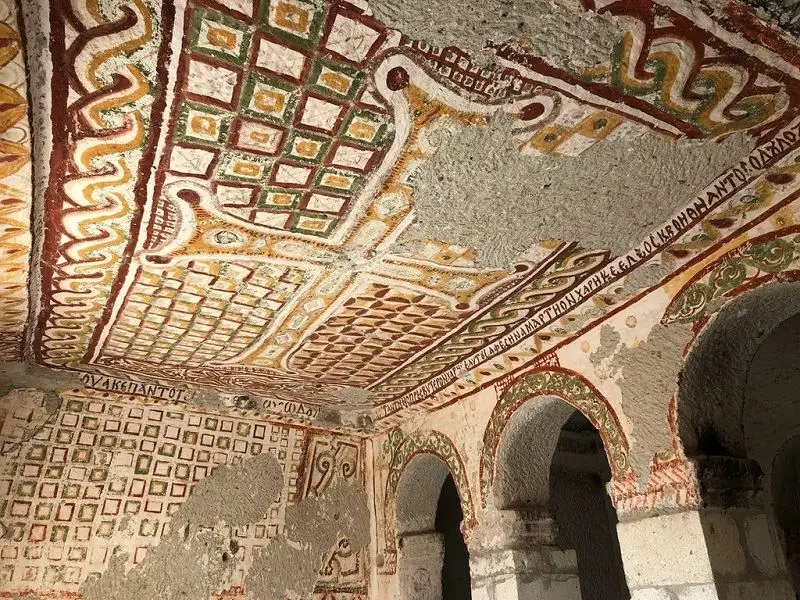 Gomeda Valley St Basils Church
The decorations of the church include both geometric and botanical elements. One of the church's must-see locations is the group of three rather huge Maltese crosses. The crosses bear inscriptions with the names of the prophets Jacob, Isaac, and Abraham. The findings of the studies led to the conclusion that the Maltese crosses were constructed to symbolize paradise. The half-relief paintings still catch people's eye, even if a portion of the church entrance was demolished. Eventually, it is estimated that this church was built between 726 and 843.
Rock Belt
When you continue to wander along the Bey Stream, which flows through the valley, you can come across the rock arches. You'll experience a lot of excitement as you pass through the underground city and then go beneath the Rock Arch. With their stunning look, the Rock Arches, one of the best locations for photography, continue to be a point of interest for all tourists.Underground city
You arrive at the underground city as you move from the valley to the right. There are many vertical and horizontal tunnels in the underground metropolis, which falls 200 meters to the right of the Gomeda Valley. Several areas of the city need crawling if you wish to see them. It should be emphasized that only the open regions are visible because many of the city's corridors are locked.Alakara Church
The Alakara Church, which is situated on the right side of the path as you begin walking in the Gomeda Valley, is only a ruin in the area. While it was established that the church was erected during the Roman era, it is known that it was visited in a fashion cut into the rocks. Together with Jesus, the images of the 12 apostles and angels shine out, even though the western portion of the church has an unoccupied door.
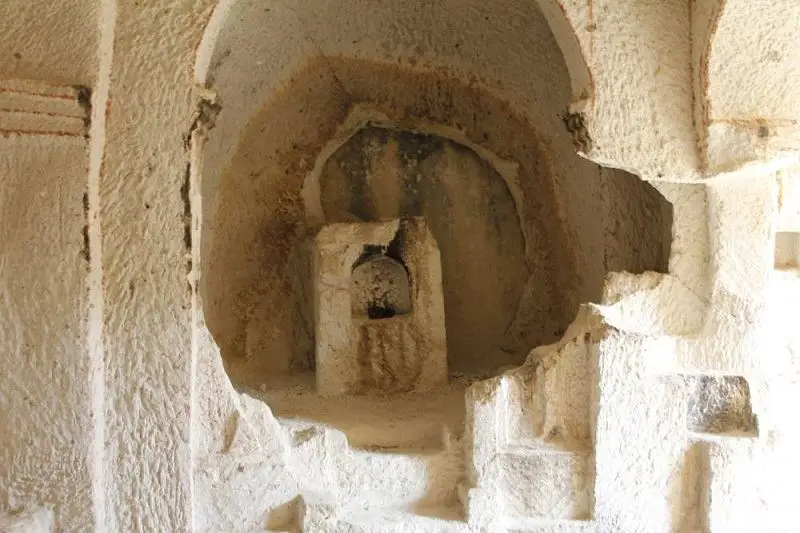 Gomeda Valley Alakara Chuch
Updated on