 Kaymakli Underground City
The underground city of Kaymakli is one of the attractions in Cappadocia. It should not be overlooked that culture and history are entwined with the underground city of Kaymakli, which is a popular site for visitors arriving in the area in their vehicles or on tours.It is well known that the Kaymakli Underground City is a fascinating route and has grown to be a favorite of both domestic and foreign travelers throughout the entire year. It may be claimed that this area always piques curiosity because it is where you will see rare natural beauties. Visitors on Cappadocia excursions explore the underground towns and learn a lot about the area.
You may read more about the history of Kaymakli, including the cost of entering the underground city of Kaymakli, in the second part of our essay about the Kaymakli region, which has been repaired and continues to exist today.Additional Information on Kaymakli
The underground city of Kaymakli was created in 3000 BC. This underground metropolis has a 1500-year growth history and contains remnants of numerous civilizations. Long and narrow tunnels connected the underground city, which has remnants of the Phrygians, Assyrians, Hittites, and Byzantines. Muslim Arabs are known to have lived in this area while Christianity was well-established. As a result, it is important to note that the area has experienced numerous wars.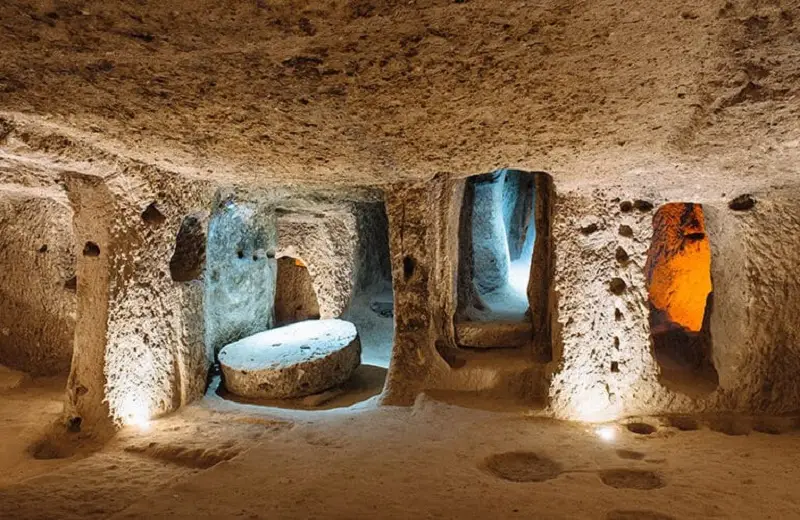 Cappadocia Kaymakli Underground City
Once the Hittites were no longer in charge of the area, the Persians took over. After that, Kaymakli became a province of Rome. Because of this, Kaymakli has a lot of buildings, although underground cities are now more prominent. The Arabs' entry into the area resulted in variances in historical architecture, but the Seljuks and later the Ottomans' authority added to the region's historical splendor.
Volcanic eruptions are, of course, the primary factor in the development of underground cities. Later, soft tuff layers were created as a result of the lava and ashes that were released during the eruptions. The Kaymakli underground city was created from the strata that, after erosion, formed a valley.Where is Kaymakli Underground City?
Nevsehir is 21 kilometers away from Kaymakli Underground City. This underground city, which was named after Kaymakli on the Ihlara Road, still bears the remnants of numerous civilizations. Not to be overlooked is the underground city, which is one of the attractions in Cappadocia and is located 25 kilometers from Göreme. The region is 31.7 kilometers from Ürgüp, 36.2 kilometers from Avanos, and 25.3 kilometers from Uchisar.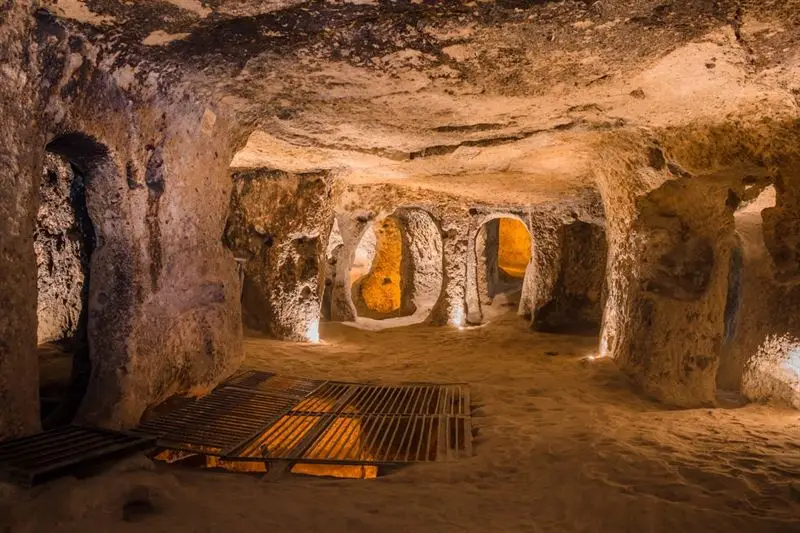 Kaymakli Underground City Cappadocia
What is the entrance fee to Kaymakli Underground City?
The Kaymakli Underground City has a $20 entrance fee. Between April and October, this underground city welcomes visitors at various times and is open to the public from 8:00 in the morning until 9:00 at night. It is open for visits between 8:00 in the morning and 17:00 between November and March.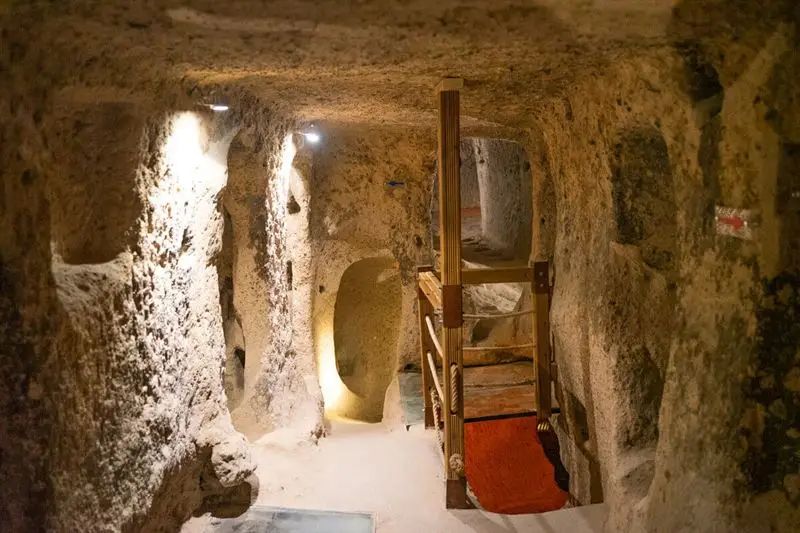 Kaymakli Underground City Tour
Kaymakli Underground City and its Features
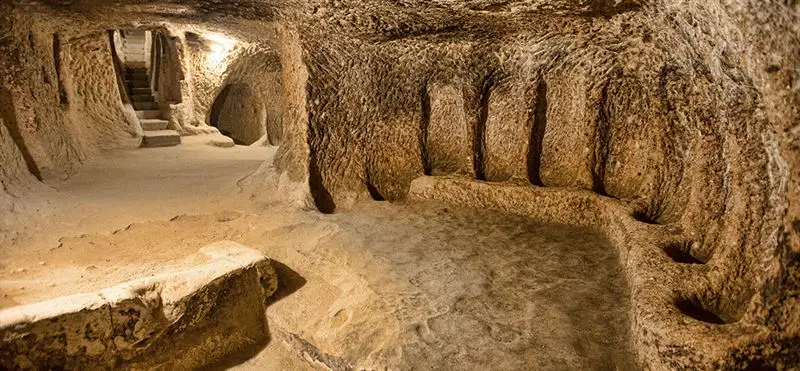
The Kaymakli Underground City is located in a very enigmatic area. The underground city of Kaymakli, which is the starting point for people who desire to travel through millions of years, has remnants of hundreds of civilizations, but it also has a significant place in terms of its historical characteristics.As of the fourth floor, visitors to the underground metropolis will have dropped to a depth of 100 meters. It should not be forgotten that an average of 5000 people can live in the enormously spacious underground metropolis of Kaymakli. Although there is 8 floors total, it would be advantageous for people who have panic episodes and claustrophobia to consider visiting this location.
 kaymakli Underground City Tours
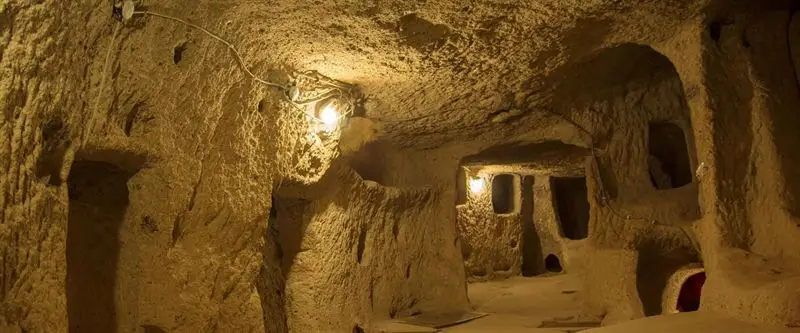
Several triangular looms can be seen in the enigmatic underground city. On the other side, oil lamps are positioned in the bezirliks to provide lighting. Little cavities are common, but Bezirhane, an oil lamp named after linseed oil, was also constructed in the underground city.
It is important to stay inside the designated areas when touring the Kaymakli Underground City. When visitors leave the designated regions, they could begin to encounter new issues. Following the blue arrows indicates ascending, and following the red arrows indicates falling. To allay the worry of becoming lost, the underground city has been marked.
Some visitors could speculate that they have ventilation issues. It should not be overlooked that the Kaymakli Underground City was skillfully built around the main ventilation, with numerous ventilation holes providing adequate air inside. Since raising animals was the main way people made a living in the past, the first floor of
Kaymakli's Underground City was turned into a barn. Barns are located on the first floor since moving animals to other stories is challenging.
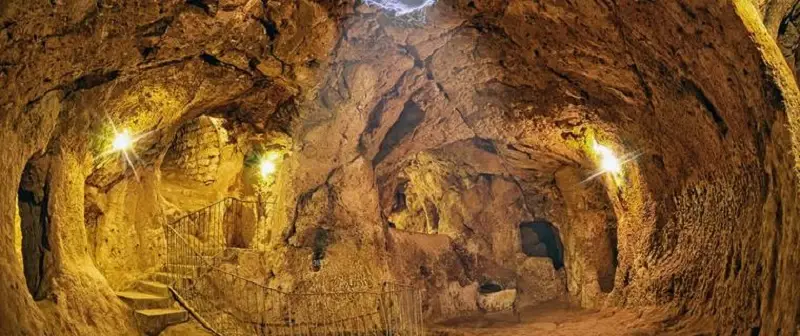 Visit Kaymakli Underground City
When people get to the second floor, they will see a church, a cemetery, and stones that were used for baptisms. One of the noteworthy buildings here, along with the church, is the bolt stone. During this time, the bolt stone was used to keep foreign visitors to the underground city under control. Furthermore, the sliding stone's average weight of 500 kg demonstrates how useful it is.
The length of the Kaymakli Underground City is roughly 10 kilometers. It is clear that this building, which connects to the Derinkuyu Underground City, was constructed with several labyrinths and tunnels to protect the local populace. Visitors to the Kaymakli Underground City will undoubtedly have an enigmatic journey.
The dining room, wine cellar, and wine houses are located on the third floor of the Kaymakli Underground City. The place where wheat and flour are kept is called Sira House. The third level, which was constructed broader than the other floors, is especially notable for its exceptional durability. Here, copper ore in stone was broken down using andesite.
The most thrilling floor of the Kaymakli Underground City, the fourth floor, has fairly low passages. In times of defense and conflict, it is intended to slow down foreigners. The kitchen, food storage, and tandoor are in the section you enter after passing through the tunnel, so you can see how enigmatic the tunnel, which was created in a truly fantastic style, is.
Updated on